Tag: education

  • Why We Want to Do Mission Work in Liberia (Part 1)

    Why We Want to Do Mission Work in Liberia (Part 1)

    by William Horrace

    Hello, everyone, my name is William Chocó Horace. I was born in Grand Bassa County, a province approximately an hour and half drive from Monrovia, the capital city of Liberia. I grew up second in a family of seven boys and two girls. My father and mother were traditionally married and stayed married until their death in 1991 and 1995 respectively. They died indirectly from the civil war situation because my father was sick and no hospitals were opened to treat him; my mother, on the other hand, died peacefully one afternoon after she and her sister had finished eating and she went into the room to get her bath towel for them to bathe. She stayed so long in the room that her sister got concerned and went to find out what was the problem. When she got into the bed room, she found her not breathing and unresponsive. She called some of the neighbors who rushed into the room and they told her she was already dead.

    On July 23, 1988, I married Miss Helena Toby who was born in Monrovia and the first of two children of her family. Our marriage is blessed with a total of five living children and three deceased. We are also very blessed to be the grandparents of ten children.

    I graduated from high school in 1977 and the first job I did was teaching. I was employed by the Camphor Memorial United Methodist Mission to teach general subjects. I worked this job from 1978 to 1980. Then I migrated to Monrovia where I attended the Arthur Barclay Technical Institute and graduated in 1984 with a diploma and certificate in Carpentry and Joinery. I was fortunate to get a job with the ministry of Youth and Sports to teach building trades at one of their facilities about 35 miles outside of Monrovia, a place called Youth Agriculture Training Center (YATC) in Bentol, formerly Bensonville. The Government of Liberia and the Fredrick Neumann Foundation of Germany ran the training programs. It was a tuition free school that catered to young Liberians who were ninth grade to high school educated but did not have the opportunity to further their education and would like to have a marketable career in agriculture, plumbing, masonry, welding and carpentry in order to become self-sufficient and contributors to the economy of the country. The students of Youth Agriculture Training Center were recruited from every part of Liberia. They lived on campus and attended school for two years. This school was very successful. Many of the graduates were involved in agriculture in their counties. They were able to earn a living to support themselves and their families. In fact, some of them were hired by large agriculture projects like the Bong County Agriculture Development Project (BCADP), the Lofa County Agriculture Development Project (LCADP), and others. Other graduates furthered their education at the Central Agriculture Research Institute (CARI) and went on to become agriculture teachers and project heads. Unfortunately, the last time this school was fully operational was December 1989 when the Liberian Civil crisis began.
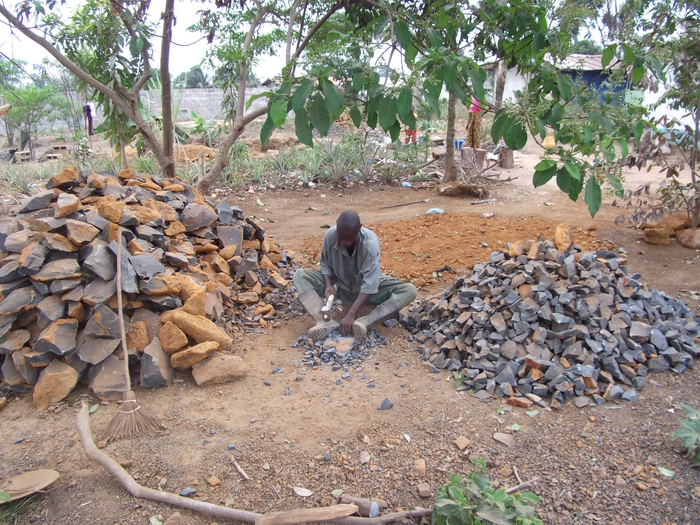
    Picture of my co-worker from YATC who is breaking rocks to sell to support his family

    When I met my wife, I was just a Christian in name only. Church attendance and activities were something I did just for the fun of it, not seriously. She encouraged me to take another look at my Christianity; which I did and in 1984 I was immersed into Christ at the Monrovia Church of Christ in Liberia. In 1992, I enrolled at the Church of Christ Bible College where I graduated in 1995 as a preacher. I was given a job as the Youth minister and later associate minister of the church from 1995-1997.

    I lived all my life in Liberia. I grew up in a family that didn’t have much in terms of money but we were able to make daily living. My mother especially, worked very hard selling fire wood, bread and fish to pay my tuition in school. I saw many other families with children that couldn’t get enough food to eat and couldn’t send their children to school because they couldn’t afford to pay tuition and fees. For the parents who tried to educate their children, they were unable to keep them in school due to lack of money. Each day in the markets and streets, children are seen selling little things like bananas, peanuts, cookies, candies, fire wood, water, etc. for their parents so that they can buy food for the family for the day. When I graduated from high school and starting teaching, I was confronted with the same problems that I saw when I was in school, of children who could not go to school because their parents had no money, or they had to take care of their sick parents, brothers or sisters.
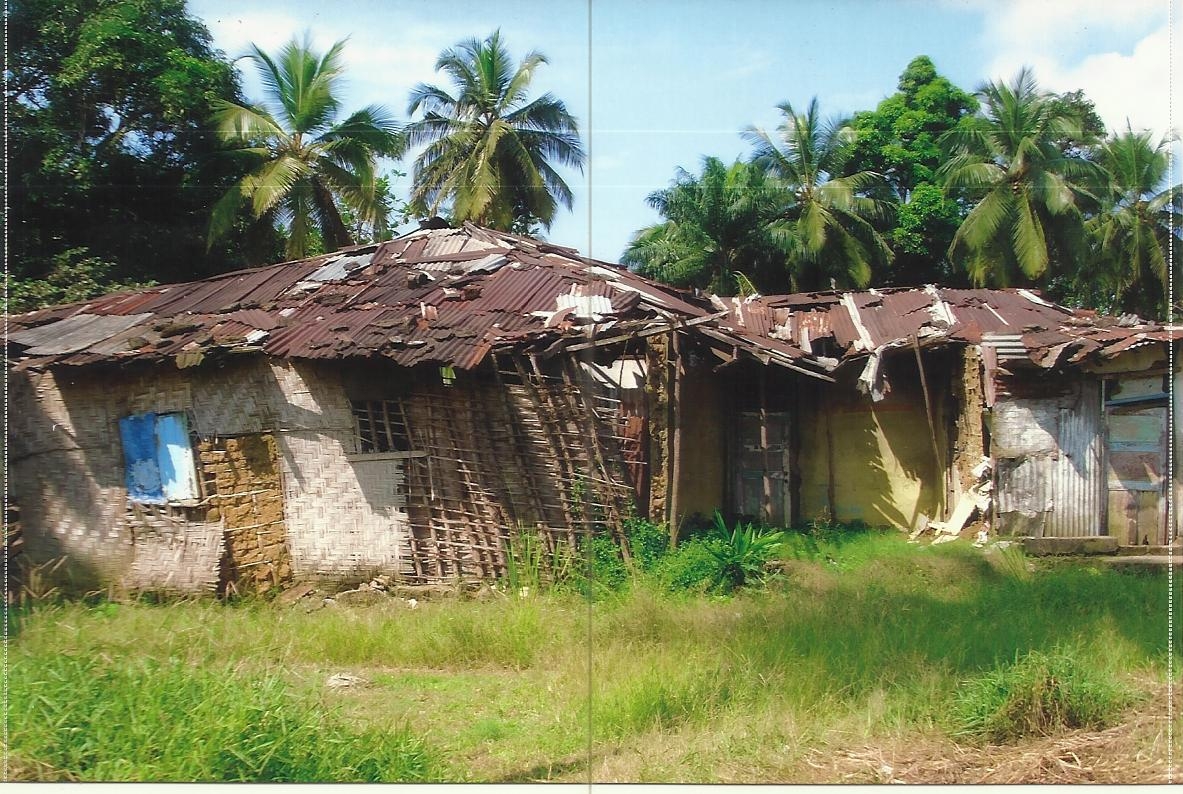
    Picture of what is left of the house I grew up in from 1965-1980

    The future of Liberia is collapsing because there can be no future when the youth of the nation are not being educated whether with basic education (primary and secondary) or technical, vocational or university education. Before the civil war and after the civil war, the country is still where it was educationally and economically. It has an approximately 85 percent illiteracy rate and 85 percent unemployment rate. The average life expectancy rate of Liberians is about 45 years. I am mentioning these things because it pains my heart that we are not doing enough to develop the human resources of our country. For example in my family I am the only person with higher education. So you can sense that before my family can rise up from poverty to reach the middle class, it will take many decades. And that is typical of many Liberian families.

    Check out Part 2 of William's Story here.

  • Our Identity, Our Mission, and Our Need for Partners

    Our Identity, Our Mission, and Our Need for Partners

    by Jim White

    Love Lights The Way is a 501c3 non-profit organization whose mission is to aid Liberia in their post-civil war recovery and help them build a better future. Liberia was devastated from nearly two decades of civil war, in which millions were displaced from their homes and hundreds of thousands were killed. Most of those killed (or maimed) were not even combatants; they were just innocent civilians that couldn’t escape the wrathful friction created between several lawless rebel groups and a corrupt government. I know these good people personally. Providence, RI was one of the main refugee cities in the USA for displaced Liberians, so there is quite a large population here. I have befriended many of them, and I have visited Liberia twice in the last two years, for two weeks at a time, to assess the conditions first-hand, and roll up my sleeves to help.

    In 2007, my church partnered with two other churches in the area and a health-care organization (one of the churches is all Liberian). Our mission was to build an orphanage in Gbarnga, Bong County, which now houses 44 healthy children who receive love, food, teaching, and care just as though they lived at home with their families. They cannot live at home with their families, however, because most of their parents were brutally murdered in the war. Since these origins, other groups have partnered and are shouldering the on-going costs of this orphanage (called Christ Children’s Home). In early 2011 these same original four partners began discussing bigger plans for the future of Liberia. Fast forward to now: We were granted 501c3 status by the US Treasury Dept. in June, 2011. We have a board of directors that meet monthly.

    In the Fall of 2011, we purchased 10 acres of land much closer to the capital city of Monrovia. We had to build a road and a bridge just to make it possible to get heavy equipment to our site, which is positioned at the top of a small mountain in a densely forested area. We have surveyed and cleared most of the land and built a warehouse and security residence. We plan to build a large orphanage that will house 80 boys and 80 girls, a K thru 12th school, a clinic, a Leadership Training School, and a church. We are basically building an entire village. The schools and clinic will be available to all who need them (local villagers as well as orphans that will live there).
    Lighthouse Village Groundbreaking
    The government of Liberia has blessed our work, and praised us for our willingness to help them develop a future. They have a very stable, and praiseworthy government, they have peace, now they just need help from outsiders to rebuild. Our goal is not to just give them aid, but train and teach them to be self-sufficient and become the future leaders of Liberia. Our first building, a K-6th school (which will double as a Church of Christ for the residents and community), is estimated to potentially cost from $250k to $300k (all USD). This will immediately aid the local villagers whose children are not able to attend school. The complete compound may take from $3MM to $5MM to build. Once construction is complete, the cost to maintain it will be very small and manageable, because labor is very affordable in Liberia compared with construction costs. These folks do not have any of the conveniences of life that we are accustomed to. There is no electrical distribution outside of Monrovia, no cable, no clean running water, no sewers, etc. It is a challenge just to drive through Monrovia because it is so crowded, and yet there is not a single traffic light yet. There used to be, but all signs of progress and infrastructure were destroyed in the war. The rebels basically bombed and pillaged their way back into the Stone Age (not the fault of the innocents that continue to suffer now).

    Liberia, although suffering and in need of outside help, is a wonderful country. Its people love the US, and are extremely welcoming and friendly to outsiders. I sensed an air of hope in my last visit, and witnessed a construction boom (meaning, a lot of people are building concrete structures one block at a time as they can afford). The people are so tired of the brutality and oppression from the war and their former government. They just want to survive. This is where we come in.

    We are presently developing a site plan for the overall property, and floor plans for the individual buildings. A water well/pump has already been built on the property. We completed the erection of a Warehouse/Security Residence. We are now ready to build the school, after which will come the clinic, an Administration office from which to manage the site, and then the orphanage. Once the orphanage is complete and operational, we will then pursue plans to build a Leadership Training School to offer jobless adults with no training or education the opportunity to obtain an education, a degree, and become contributors to their communities and country.

    This dream is not possible without the generous support of many people. We need to raise hundreds of thousands of dollars as quickly as possible. We encourage you to consider any of the options below to help support the building of this community of hope:

    • One-time donation (NO GIFT IS TOO LARGE)
    • Sign up for monthly contributions via EFT (recommend $10/mo or $25/mo, or more)
    • Conduct a special contribution or collection at your church/organization
    • If you find it in your hearts to make a donation to help us build this village, you can either send a check made payable to Love Lights The Way (to the address listed on the website) or donate online via our website. Contact us for details on setting up the monthly EFT draw.

    Thank you so much for your time reading this. May God bless you as you seek to be a blessing to others. 

    Sincerely and with the Hope we have in Jesus,
    Jim White – Secretary, Love Lights The Way