
Author: LLTW

  • My Side of the Story About the War in Liberia

    My Side of the Story About the War in Liberia

    by Effort Williams

    What do you do when life seems so perfect but then you’re hit with a 360 twist, all of the sudden your life seems to be at stake? Well I remember it like it was yesterday, in Liberia when the war abruptly took place. I was in school with my siblings sitting in class. It was morning class section just before the bell rang for second period; we heard loud noises knocking at the school gate.. When we looked to see where the noise was coming from, we saw a group of parents knocking at the gate, yelling, and forcing the gate to be open. When the gate man opened the gate, those parents that were at the gate said, “The war has started.” Student parents came running in and told the school principle what was going. Panicking parents immediately held their kids tightly, while other students ran home to their families. The town, street and market place were crowded with people running and crying. Parents carried their infants on their backs, while other parents walked side by side with their teenage sons and daughters. Not only did these parents carry their kids on their backs but they also migrated with food and clothes, just to have something to wear and eat if they were successfully able to run without being captured by the soldiers. Government soldiers and rebels surrounded streets, killing, stealing from people, and abducting kids of all ages and sex to join arms with the soldiers.
     The war was three towns away from our town and I could smell the smoke in the air from the rebels burning down houses, hospital, government buildings and private facilities. While those horrifying events was taking place, the ex President Charles Taylor did nothing but encourage the soldiers to fight against their own citizens; Citizens that were unarmed and weren’t looking for a fight, but only peace.The war has a huge toll on our country now. The damages has left the country in debt, people are left without a place to dream. The war left many wounded, mentally and physically. Due to this devastating civil war, the amount disabilities and handicaps skyrocketed. About 250,000 Liberians were killed. Another 1.5 million were forced to flee their homes.

    Although the war has ended, the history never fades away. The living condition in Liberia is terrible. People are living in poverty. Many go a day or two without eating. It is a struggle daily to live in the impoverished conditions. I can sit here today and say that I was very fortunate to survive such a horrific scene. It is a blessing to wake up in the morning with a loaf of bread to eat and a clean water to drink while others are dying of hunger.

    I am so excited about the mission work of Love Lights the Way. The mission will provide my fellow Liberian with hope. Love lights the way will bring joy, peace, and happiness to those kids that are suffering and living in poverty. Love lights the way will also help bridge the gap of literacy in Liberia and provide a better living condition with a Clinic, School, Church, and a place to sleep and a place to called home. By supporting love lights the way, you will be helping to better many lives. Kids would wake up in the morning and look forward to a better day.

    Effort Williams is a member of the Providence Church of Christ and was a child during the war in Liberia. Thank you for sharing your story with us Effort!

  • Why We Want to Do Mission Work in Liberia (Part 2)

    Why We Want to Do Mission Work in Liberia (Part 2)

    by William Horrace

    Find Part 1 of William's story here

    In 1998, my family and I came to the United States after we won the Diversity Visa Lottery called DV. We lived for two years in Baltimore, Maryland and then we heard about the Sunset International Bible Institute in Lubbock, Texas. We applied there and we were accepted. We began attending the school from 2000 and graduated in 2002. During our second year, we came to Rhode Island for local mission work for two weeks. We worked with the Providence Church of Christ which is approximately 95% Liberians. The brethren in Providence sent a letter to the director asking him for us to come to Rhode Island to work with the church on a long term basis. One day, the director called us into his office and told us about the church’s request. We told him, “You know we have decided to go back to Liberia after graduation to work with the Liberians there. How can we do this?” He told us, “You know I am an American, but I worked as a missionary in Sierra Leone, West Africa. I did not know the people. You know the people who are asking for you, they are Liberians, the same people you want to work with in Liberia. You can’t leave them here and go to Liberia. Maybe God wants you to start here.” We concluded the meeting by saying, we would pray about it. After a few days, we told him that we have decided to work with the Providence Church of Christ in Rhode Island. From June 2002 until now, we are here working—preaching, teaching and evangelizing.
    Missionary Work in Liberia

    Prior to our coming to the United States of America, we have planned to assist our people in whatever ways possible, starting with our extended families and others. While we were working in Liberia, we helped to pay tuition for our family members and other children whose situations we knew about. In fact, some of them were living with us and going to school. We are still assisting some of those people while in the United States and we want to return home to give whatever help that we can.

    Why do we really want to return home? The needs of our people are enormous. There are moral, social, physical, educational, and religious needs just to start. Somebody has to be willing and ready to try and bring some changes and hope to those families, especially the children who are the future leaders of the nation. We are willing to go and do our part. Thank goodness we have people who are going regularly to help and return and some who are already permanently residing in the country delivering some assistance. But that is not enough for a country of nearly three and a half million people with such big needs.

    My wife and I have already discussed with the White Station Church of Christ in Memphis, Tennessee, the congregation that supports us in Rhode Island about our intention to go back to Liberia and do missionary work. We have set the date as 2017. Also, we have had fruitful discussions with the Providence Church of Christ, the congregation we are working with in Rhode Island about us doing mission work in Liberia and they have agreed and are supportive.

    Then, the questions are: Are we prepared? Where will we be working? Yes, we are ready and making preparations for the task. I am prepared to teach (academic and vocational), preach and teach the Bible, evangelize, counsel and lead. My wife will be graduating in May of this year with a degree in Early Childhood Development. Presently she is running a child daycare in our home. She also has experience in taking care of the elderly from working in group homes and nursing homes.

    Our work will be based outside of Monrovia, preferably in Fendell where Love Lights the Way will have its Lighthouse Village. The set up of Lighthouse Village and its operation will be similar to the campus of the Youth Agriculture Training Center where we worked for many years prior to the outbreak of the civil war (learn more about YATC in Part 1 of this story). On the campus of YATC we had staff residences, dormitories for students, an administrative building, a clinic, school buildings, store houses, a cafeteria, water towers and more. Students were recruited from every county of Liberia and brought on campus to live and learn free of charge. This is similar to what we want to do with Lighthouse Village.

    Our Appeals

    The Love Lights the Way foundation has a tremendous task at hand. The people of Liberia, especially the children, are in dire need of assistance of all kinds. The civil war according to some expects, threw the country's infrastructure and human development back about 100 years. That means it could take a century to develop every aspect of Liberia back. This is not impossible, it can be done. We need your assistance, especially financially. We cannot do this all by ourselves. You can donate to Love Lights the Way by giving a one-time or monthly donation or arrange fund raising events for the foundation. Whatever you find in your heart to do for us, please do it. Know this: no amount of money is too small for us to accept. To complete the Lighthouse compound it will take about 3 to 5 million dollars, but we can build it one building at a time. The next building, which is K-6th grade including the church edifice will cost approximately three hundred thousand dollars.

    We want to thank you so much for taking your time to read this piece. May God richly bless you as you are deciding about your involvement in the work of Love Lights the Way foundation.

    Respectfully yours,
    William Chocó Horace
    member of the board of directors, LLTW

  • Why We Want to Do Mission Work in Liberia (Part 1)

    Why We Want to Do Mission Work in Liberia (Part 1)

    by William Horrace

    Hello, everyone, my name is William Chocó Horace. I was born in Grand Bassa County, a province approximately an hour and half drive from Monrovia, the capital city of Liberia. I grew up second in a family of seven boys and two girls. My father and mother were traditionally married and stayed married until their death in 1991 and 1995 respectively. They died indirectly from the civil war situation because my father was sick and no hospitals were opened to treat him; my mother, on the other hand, died peacefully one afternoon after she and her sister had finished eating and she went into the room to get her bath towel for them to bathe. She stayed so long in the room that her sister got concerned and went to find out what was the problem. When she got into the bed room, she found her not breathing and unresponsive. She called some of the neighbors who rushed into the room and they told her she was already dead.

    On July 23, 1988, I married Miss Helena Toby who was born in Monrovia and the first of two children of her family. Our marriage is blessed with a total of five living children and three deceased. We are also very blessed to be the grandparents of ten children.

    I graduated from high school in 1977 and the first job I did was teaching. I was employed by the Camphor Memorial United Methodist Mission to teach general subjects. I worked this job from 1978 to 1980. Then I migrated to Monrovia where I attended the Arthur Barclay Technical Institute and graduated in 1984 with a diploma and certificate in Carpentry and Joinery. I was fortunate to get a job with the ministry of Youth and Sports to teach building trades at one of their facilities about 35 miles outside of Monrovia, a place called Youth Agriculture Training Center (YATC) in Bentol, formerly Bensonville. The Government of Liberia and the Fredrick Neumann Foundation of Germany ran the training programs. It was a tuition free school that catered to young Liberians who were ninth grade to high school educated but did not have the opportunity to further their education and would like to have a marketable career in agriculture, plumbing, masonry, welding and carpentry in order to become self-sufficient and contributors to the economy of the country. The students of Youth Agriculture Training Center were recruited from every part of Liberia. They lived on campus and attended school for two years. This school was very successful. Many of the graduates were involved in agriculture in their counties. They were able to earn a living to support themselves and their families. In fact, some of them were hired by large agriculture projects like the Bong County Agriculture Development Project (BCADP), the Lofa County Agriculture Development Project (LCADP), and others. Other graduates furthered their education at the Central Agriculture Research Institute (CARI) and went on to become agriculture teachers and project heads. Unfortunately, the last time this school was fully operational was December 1989 when the Liberian Civil crisis began.

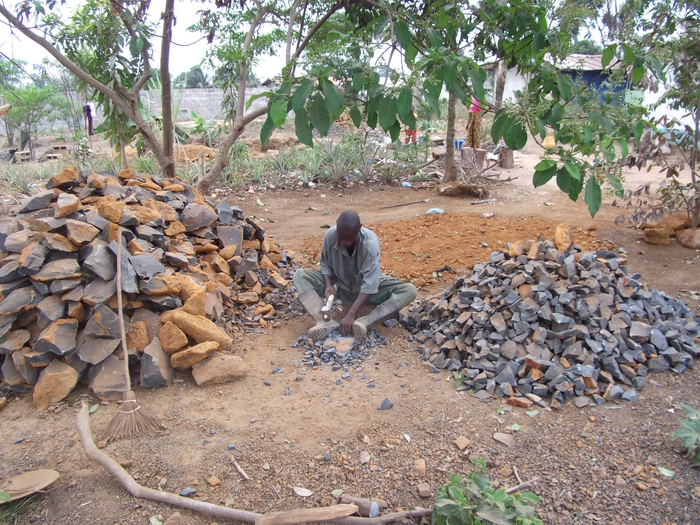
    Picture of my co-worker from YATC who is breaking rocks to sell to support his family

    When I met my wife, I was just a Christian in name only. Church attendance and activities were something I did just for the fun of it, not seriously. She encouraged me to take another look at my Christianity; which I did and in 1984 I was immersed into Christ at the Monrovia Church of Christ in Liberia. In 1992, I enrolled at the Church of Christ Bible College where I graduated in 1995 as a preacher. I was given a job as the Youth minister and later associate minister of the church from 1995-1997.

    I lived all my life in Liberia. I grew up in a family that didn’t have much in terms of money but we were able to make daily living. My mother especially, worked very hard selling fire wood, bread and fish to pay my tuition in school. I saw many other families with children that couldn’t get enough food to eat and couldn’t send their children to school because they couldn’t afford to pay tuition and fees. For the parents who tried to educate their children, they were unable to keep them in school due to lack of money. Each day in the markets and streets, children are seen selling little things like bananas, peanuts, cookies, candies, fire wood, water, etc. for their parents so that they can buy food for the family for the day. When I graduated from high school and starting teaching, I was confronted with the same problems that I saw when I was in school, of children who could not go to school because their parents had no money, or they had to take care of their sick parents, brothers or sisters.

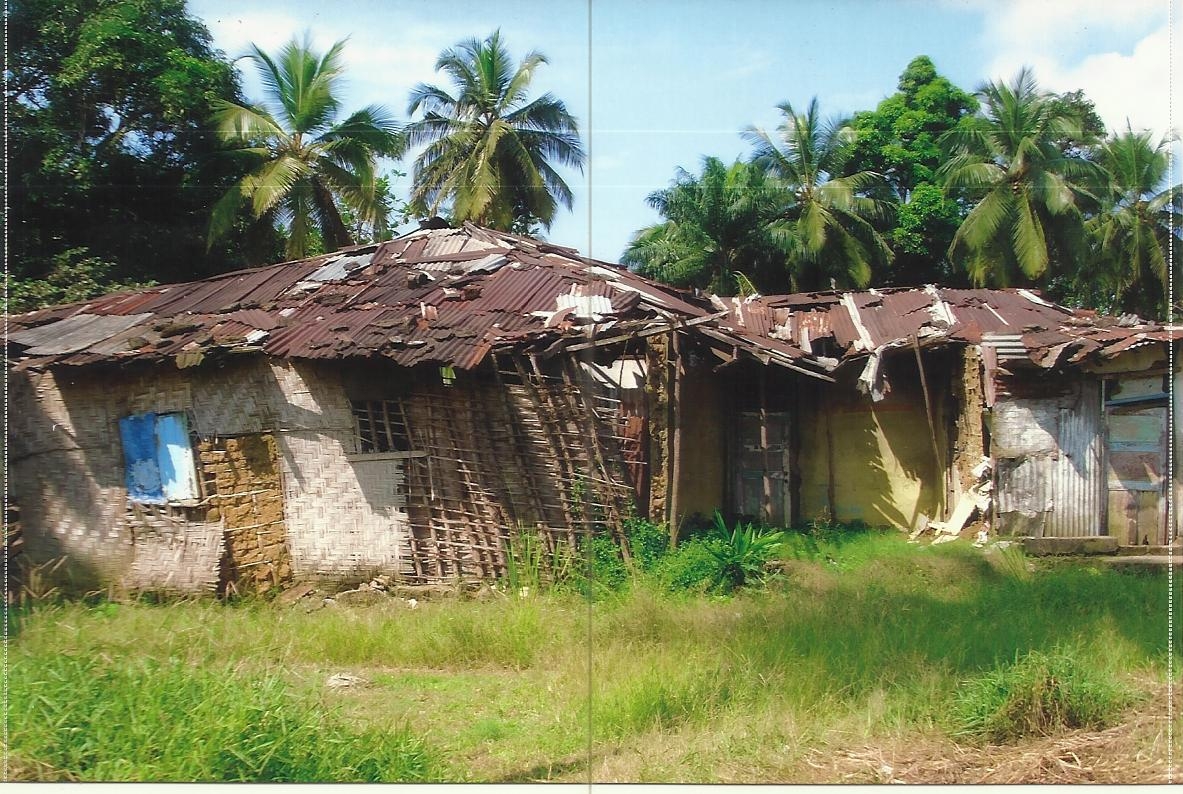
    Picture of what is left of the house I grew up in from 1965-1980

    The future of Liberia is collapsing because there can be no future when the youth of the nation are not being educated whether with basic education (primary and secondary) or technical, vocational or university education. Before the civil war and after the civil war, the country is still where it was educationally and economically. It has an approximately 85 percent illiteracy rate and 85 percent unemployment rate. The average life expectancy rate of Liberians is about 45 years. I am mentioning these things because it pains my heart that we are not doing enough to develop the human resources of our country. For example in my family I am the only person with higher education. So you can sense that before my family can rise up from poverty to reach the middle class, it will take many decades. And that is typical of many Liberian families.

    Check out Part 2 of William's Story here.